Hiển thị các bài đăng có nhãn Process. Hiển thị tất cả bài đăng

Thứ Sáu, 27 tháng 11, 2015

Writing Task 1 - Process - Một số samples

1. Ví dụ 1


Mở bài:

CÂU ĐỀ BÀI:
The diagram illustrates the process that is used to manufacture bricks for the building industry.

CÂU VIẾT LẠI:
The flow chart shows how bricks are produced for, and delivered to the building industry

Overview

Overall, there are 7 stages in the whole brick producing process, beginning with clay excavation and ending with the delivery of the bricks to the customers.

Thân bài

Firstly, clay is dug up by using a big digger. To get rid of the oversized pieces, clay is placed on a
metal grid and small pieces drop onto a large roller. At the next stage, sand and water are added to the clay. After the bricks are shaped by using a wire cutter or a mould, they are moved to a drying oven for 24 to 48 hours.

Those bricks are then fired in a special kiln at a moderate temperature (200c - 980c) at the fourth step. Afterwards, they continue to be heated for the second time at a higher temperature (870c - 1300c) in another kiln. Before being packaged at the sixth stage, the bricks are treated in a cooling chamber for 48 to 72 hours. The entire brick producing process concludes after the bricks are delivered to customers.

2. Ví dụ 2


The diagrams below show the stages and equipment used in the cement- making process, and show how cement is used to produce concrete for building purposes.


The given diagrams illustrate the production of cement, and how to use cement to make concrete.

It is clear that there are five main stages in the process of making cement; meanwhile, only two steps are required to produce concrete.

At the first stage of producing cement, limestone and clay are put through a machine called crusher and become power. This power is then mixed and is brought into a rotating heater where it is heated in high temperature. The process continues with grinding the material and then cement is produced. At the final stage, cement is packaged into bags and is ready for the production of concrete.

Moving to the production of concrete, the first step is combining different materials – water, sand and small stones in the proportions of 10%, 25% and 50% respectively. This mixture is next put into a concrete mixer in order to become final concrete which can be used for building purposes.

3. Ví dụ 3
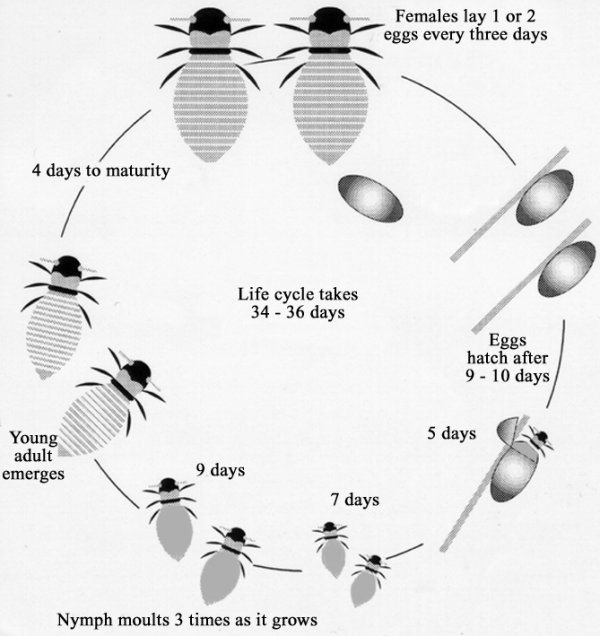


The diagram illustrates the various stages in the life of a honey bee. We can see that the complete life cycle lasts between 34 and 36 days. It is also noticeable that there are five main stages in the development of the honey bee, from egg to mature adult insect.

The life cycle of the honey bee begins when the female adult lays an egg; the female typically lays one or two eggs every 3 days. Between 9 and 10 days later, each egg hatches and the immature insect, or nymph, appears.

During the third stage of the life cycle, the nymph grows in size and sheds its skin three times. This molting first takes place 5 days after the egg hatches, then 7 days later, and again another 9 days later. After a total of 30 to 31 days from the start of the cycle, the young adult honey bee emerges from its final molting stage, and in the space of only 4 days it reaches full maturity.

Writing Task 1 - Process - Cấu trúc và từ vựng

Bên cạnh các cách diễn đạt trong phần phương pháp chung có thể sử dụng các cấu trúc và từ vựng sau.

1. Một số cụm có thể dùng trong cả bài tránh lặp từ


  •     The production of……………..
  •     The process of producing/ making………………
  •     How………….is produced/ made.
  •     How to produce/ make…………

2. Cấu trúc và từ vựng cho phần mở bài


  • The flowchart/The diagram/Timeline
  • The diagram demonstrates/shows   the procedures/The various stages/steps in producing a TV
  • The diagram shows each stage of producing the TV

Các cấu trúc:


a. X (shows/describes/illustrates) how + clause

  • E.g: The diagram below shows how salt is removed from sea water to make it drinkable

b. X (shows/describe/illustrates) + noun

  • E.g: The charts below show the result of public survey

Note: Illustrate thường được dùng cho diagram để miêu tả 1 quá trình gì đó

  • E.g: The diagram illustrates the various stages in the desalination of seawater to make it suitable for drinking

c. X (provides/gives) information about……….

3. Overview


  •     There are………………..main steps/ stages in…………………..
  •     The …………………….involves ………………….main steps/ stages beginning with………………and finishing with…………………..

Nếu có 2 bức tranh chỉ 2 process thì cần giới thiệu mỗi process có bao nhiêu bước, viết trong 1 câu, dùng các từ nối như meanwhile/ while/…

Eg: There are five main steps in the process of producing milk, meanwhile only three stages are required to store it after that.


Nếu là natural process và như một vòng tuần hoàn, ta có thể viết câu overview như: In general, the process includes a series of stages like a natural circle (1 vòng tròn tự nhiên)/ a life cycle of…………..(một vòng đời của 1 con vật nào đó), but involves……………..main steps which begins with……………………..and finishes with…………………….

4. Thân bài


Bắt đầu process:
  • To begin with,
  • First of all,
  • In the first step,
  • Firstly/First/Initially
  • The first step is involved + Ving
  • Commence = Begin = Start

Các steps tiếp theo:
  • Following that,
  • The second stage is that…
  • In the next/ subsequent step,
  • …… followed by…..
  • After that,
  • Next/Then/Afterwards/Subsequently/At the next stage + Clause

Các steps diễn ra cùng lúc:
  • At the same time,
  • Simultaneously,
  • While
  • As 

Kết thúc process:
  • Finally / Lastly,
  • The last/ final process is that…

5. Một số động từ hữu dụng

  •     Change from…………into
  •     Bring from…. To
  •     Move from…….to
  •     Transform into
  •     Give birth to
  •     Appear/ disappear
  •     Pipe from…. To
  •     Become

6. Một số danh từ hữu dụng

  •     The transformation of something into
  •     The conversion of something into
  •     The replacement of something into
  •     The disappearance of something into
  •     The appearance / emergence of/ birth of
  •     The support of
  •     The birth of
  •     The removal of
  •     The elimination of
  •      The combination/ mixture of

Writing Task 1 - Process - Phương pháp chung

1. Các dạng process


  • Manufaturing process (MP): Là quá trình sản xuất hay nhân tạo, nên nhất định phải có sự hỗ trợ của máy móc, con người. Thường dùng Passive Form
  • Natural Process (NP): Là quá trình xảy ra ngoài tự nhiên, tự bản thân nó thực hiện, không cần tác nhân con người. Thường dùng Active Form


Chú ý sử dụng thì hiện tại đơn

 2. Nhiệm vụ


  • Chỉ ra process này nói về cái gì ?
  • Có những giai đoạn nào xảy ra trong process này ?
  • Mô tả từng bước của process


3. Mở bài


Paraphrase lại câu đề bài

Các câu trúc thường dùng:

a. The chart/diagram (shows/describes/illustrates) how + clause

  • The diagram shows how fresh apple is canned

b. The chart/diagram(shows/describe/illustrates) + noun

  • The figure illustrates the process used by the Australian Bureau of Meteorology to forecast the weather.

c. The chart/diagram (provides/gives) information about…

  • The diagram provides information about the involved stages in the lives of silkworms and the process of silk cloth production

4. Overview


Đầu tiên chỉ ra có bao nhiêu bước trong process ấy. Tiếp theo nói về ở đâu và làm thế nào process ấy bắt đầu và kết thúc ?

Cấu trúc thường dùng:
  • There are ….main stages (steps) in the process/in the process of producing…,beginning with…and ending with…
  • The process (of producing…) includes…main stages (steps)…,beginning with…and ending with…

5. Thân bài


Phân thân bài thành 2 khổ: có thể phân từ giai đoạn đầu đến giữa cho khổ 1, còn lại cho khổ 2

„Sequencing’ language:

a. The first step
  • The first step in the process is
  • The first stage in the process is
  • The process begins with
  • The process commences with
b. Subsequent steps
  • Subsequently,
  • The process continue with…
  • The next step is
  • In the next stage,
  • In the following stage,
  • Following this,
c. The final step
  • The process finishes with ...
  • The process concludes with ...
  • The last step is …